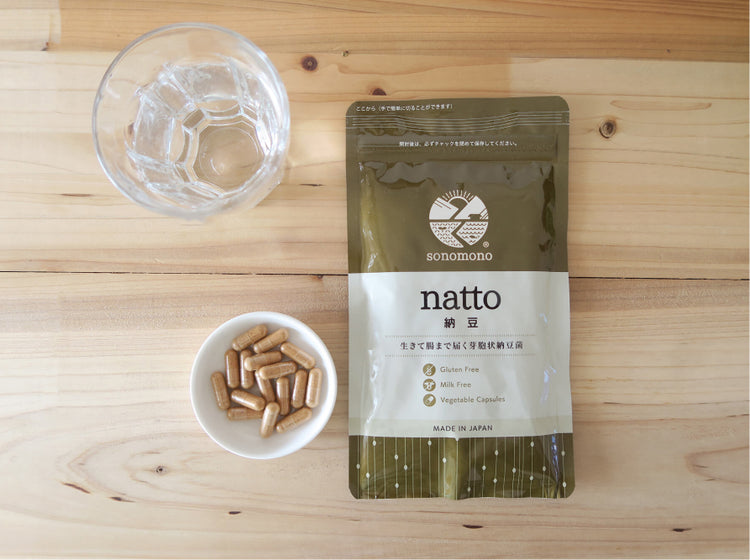
Can You Take Natto Every Day? Safety, Vitamin K and Medication Interactions
Can you eat natto or take natto-based supplements every day? Learn what to know about soy allergies, vitamin K, warfarin, nattokinase, pregnancy, surgery and when to speak with a healthcare professional.
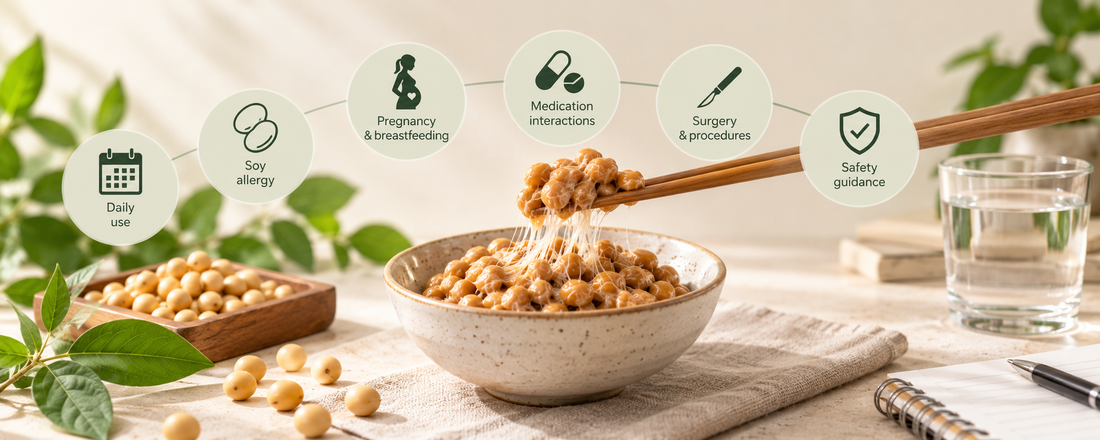
Can You Take Natto Every Day? Safety, Vitamin K and Medication Interactions
Natto is a traditional Japanese food made by fermenting soybeans. It is known for its distinctive texture, flavour and nutritional profile. Natto-based supplements are also available, including products made from natto powder and supplements containing nattokinase, an enzyme associated with the fermentation process.
But can you take natto every day?
The answer depends on the form you consume, your health circumstances, your medications and the product's ingredients. Eating natto as a food is not the same as taking a concentrated nattokinase supplement. Before making either part of your daily routine, it is important to understand vitamin K, soy allergies and possible medication interactions.
This guide covers the main safety questions to consider before choosing a natto-based product.
1. Is it safe to consume natto every day?
Natto is traditionally eaten as a food, and some people include it regularly in their diets. However, the safety considerations for daily consumption depend on the amount consumed, individual tolerance and medical circumstances.
Natto-based products are not all interchangeable. For example:
-
Traditional natto: Fermented whole soybeans eaten as food.
-
Natto powder: A powdered preparation made from natto; its composition depends on the manufacturing process.
-
Nattokinase supplements: Products formulated to provide the enzyme nattokinase, often with activity stated in fibrinolytic units (FU).
-
Natto supplements containing vitamin K2: Products that may provide menaquinone, a form of vitamin K, in addition to other ingredients.
A supplement made from natto powder should not automatically be assumed to have the same composition or effects as a concentrated nattokinase product.
There is also a difference between a food's history of use and evidence establishing the long-term safety of a particular supplement. Research on nattokinase in humans remains limited, and findings from one formulation cannot necessarily be applied to every product.
Before taking a natto-based supplement daily, read the label and consider your medications, allergies and health history. If you have a medical condition or take prescription medication, ask your healthcare professional whether the specific product is suitable for you.
2. Why does vitamin K matter?
Vitamin K is an essential nutrient involved in normal blood clotting. It also contributes to other functions in the body.
Natto is particularly relevant to this topic because fermented soybeans can contain substantial amounts of vitamin K, including vitamin K2. The amount present in a natto food or supplement varies by product and manufacturing process.
This becomes especially important for people taking warfarin.
Natto and warfarin
Warfarin is an anticoagulant medicine that helps prevent harmful blood clots. It works by interfering with vitamin K-dependent clotting factors.
Consuming more vitamin K than usual can reduce warfarin's anticoagulant effect and affect the international normalised ratio (INR), a test used to monitor its action. Large changes in vitamin K intake can therefore affect treatment.
The NHS guidance on warfarin advises people taking warfarin not to take vitamin K supplements without medical advice and to discuss significant dietary changes with their healthcare professional.
If you take warfarin:
-
Do not start a natto-based or vitamin K-containing supplement without consulting your anticoagulation clinic, doctor or pharmacist.
-
Do not make major changes to your usual vitamin K intake without medical guidance.
-
Check whether the product contains vitamin K1, vitamin K2 (including MK-7) or other added ingredients.
-
Do not change your warfarin dose yourself to accommodate a supplement.
You may not need to avoid every food containing vitamin K. The important point is to follow your clinician's advice and maintain a consistent intake appropriate to your treatment.
What if a supplement contains vitamin K2 MK-7?
Vitamin K2 MK-7 is a form of vitamin K found in some fermented foods and dietary supplements. Its presence does not automatically make a product appropriate for everyone.
For people taking warfarin, a product containing MK-7 requires particular caution because vitamin K can interfere with the medicine's intended effect. Speak with your healthcare professional before using it.
Other anticoagulants, such as apixaban or rivaroxaban, work differently from warfarin, so the vitamin K interaction is not the same. However, this does not mean every natto or nattokinase supplement is safe to combine with them.
3. Can natto or nattokinase interact with blood thinners?
This is one of the most important safety considerations when evaluating natto-based supplements.
Nattokinase has been studied for its effects on fibrinolysis, the process through which the body breaks down fibrin involved in blood clots. However, research in humans is limited, and it should not be treated as a proven substitute for prescribed anticoagulant treatment.
Nattokinase may increase bleeding risk when used with medicines that affect clotting or platelet function. Potentially relevant medicines include:
-
Anticoagulants, such as warfarin and other prescribed blood thinners.
-
Antiplatelet medicines, such as aspirin or clopidogrel.
-
Other medicines or supplements that may increase bleeding risk.
The extent of the interaction may depend on the medication, dose, supplement formulation and individual health circumstances. Do not assume that a product is safe simply because it is labelled natural.
If you take a blood thinner, have a bleeding disorder or have a history of a significant clotting condition, consult your clinician before using a nattokinase supplement. Do not stop or replace a prescribed medicine with nattokinase.
4. Should you stop taking natto before surgery or dental work?
Tell your surgeon, dentist and healthcare team about all supplements you use, including natto powder, nattokinase and products containing vitamin K2.
Nattokinase may affect bleeding risk, and the appropriate precautions can depend on the product and the planned procedure. Your healthcare team can advise whether you should stop a supplement and, if so, when.
Do not decide on your own when to discontinue or restart a supplement around surgery. Equally, do not stop prescribed anticoagulant or antiplatelet medication unless your treating clinician instructs you to do so.
If you have an upcoming operation, dental procedure or other intervention, discuss your supplement use with the relevant healthcare professional in advance.
5. What about natto during pregnancy or breastfeeding?
If you are pregnant, planning a pregnancy or breastfeeding, speak with a qualified healthcare professional before starting a natto-based supplement, particularly a concentrated nattokinase product.
Evidence establishing the safety of nattokinase supplementation during pregnancy and breastfeeding is limited. The safety of a traditional food cannot automatically be used to establish the safety of a concentrated supplement.
If you are taking prescribed medication or receiving medical care during pregnancy, do not add a supplement without checking with your healthcare team.
6. What if you have a soy allergy?
Natto is made from soybeans, so soy is an important ingredient to check.
If you have a known soy allergy, do not assume that fermentation or processing removes the allergen risk. Avoid a product unless your allergy specialist or healthcare professional confirms that it is appropriate for you.
Before buying a natto-based supplement, review:
-
The ingredient list and allergen declaration.
-
Whether soybeans or soy-derived ingredients are present.
-
Any warnings about shared manufacturing equipment or cross-contact.
-
The manufacturer's information if the label does not clearly answer your question.
Seek urgent medical attention if you develop signs of a serious allergic reaction, such as difficulty breathing, swelling of the tongue or throat, or collapse.
7. How should you check a natto supplement label?
Before adding a product to your daily routine, look beyond the front of the packaging.
Check the following details:
-
Product type: Is it natto powder, natto extract or a concentrated nattokinase supplement?
-
Ingredients: Does it contain soy, vitamin K2 MK-7 or other added ingredients?
-
Serving information: What amount does the label specify per serving, and how many servings does it recommend?
-
Allergen information: Are soy and potential cross-contact warnings clearly stated?
-
Safety guidance: Does the label include warnings about medication interactions or medical conditions?
-
Manufacturer information: Are the ingredients, product identity and directions clearly disclosed?
Remember that milligrams (mg) measure mass, while fibrinolytic units (FU) describe nattokinase activity. These measurements are not interchangeable, and there is no universal conversion between them.
A natto powder product and a supplement standardised for nattokinase activity should not be compared on the basis of milligrams alone.
For more guidance, read our related article: FU vs mg: How to Read a Nattokinase Supplement Label.
8. Does taking natto every day guarantee health benefits?
No. A daily routine does not guarantee a particular health outcome.
Natto is a traditional fermented food, and nattokinase has been the subject of scientific research. However, evidence for nattokinase supplements in humans remains limited. Results from preliminary studies do not establish that every product will provide a specific benefit or that long-term use is suitable for everyone.
Be cautious of claims that a natto-based supplement can prevent or treat blood clots, replace prescribed medication or guarantee improvements in circulation.
If you are considering a supplement for a particular health concern, discuss the evidence and your treatment options with a qualified healthcare professional.
9. When should you speak with a healthcare professional?
Seek personalised advice before taking a natto-based supplement if you:
-
Take warfarin or another anticoagulant or antiplatelet medicine.
-
Have a bleeding disorder or a history of significant clotting problems.
-
Have surgery or a dental procedure planned.
-
Are pregnant, planning a pregnancy or breastfeeding.
-
Have a soy allergy.
-
Have a medical condition or take medicines that require monitoring.
If you experience unusual or persistent bleeding, black stools, blood in your urine, severe unexplained bruising or other concerning symptoms while taking a supplement, seek prompt medical advice. Severe bleeding or signs of a serious allergic reaction require emergency care.
Frequently asked questions
Can I eat natto every day?
Some people regularly eat natto as part of their diet. Whether daily consumption is appropriate for you depends on your health, tolerance and medications. If you take warfarin, discuss natto consumption and any significant dietary changes with your healthcare professional.
Is natto safe with warfarin?
Do not start a natto-based supplement without medical advice if you take warfarin. Natto can contain substantial vitamin K, which may reduce warfarin's effect. Nattokinase supplements may also raise bleeding concerns. Ask your anticoagulation clinic or prescribing clinician about the specific product.
Is natto the same as nattokinase?
No. Natto is a fermented soybean food. Nattokinase is an enzyme produced during natto fermentation and is also sold in concentrated supplement form. Natto powder, natto extract and nattokinase supplements may differ in composition and activity.
Can I take natto with aspirin?
Do not assume that combining aspirin with a nattokinase supplement is safe. Nattokinase may increase bleeding risk when used with medicines that affect platelet function or clotting. Ask your clinician or pharmacist before combining them.
Is natto safe before surgery?
Tell your healthcare team about any natto-based or nattokinase supplement before surgery or dental work. Follow their advice about whether and when to stop it.
Can I take a natto supplement if I have a soy allergy?
Natto is made from soybeans. If you have a soy allergy, do not use a natto-based supplement unless an appropriate healthcare professional has confirmed that it is safe for you.
The bottom line
Natto can be part of some people's regular diets, but daily use of a natto-based supplement is not automatically appropriate for everyone. The product's ingredients, vitamin K content, nattokinase activity, medication interactions and your medical history all matter.
If you take warfarin or another blood-thinning medicine, have an upcoming procedure, are pregnant or breastfeeding, or have a soy allergy, speak with your healthcare professional before starting a supplement.
At Living Alpha, we encourage informed choices, careful label reading and conversations with qualified healthcare professionals when considering dietary supplements.
Important disclaimer: This article is for general educational purposes only and is not medical advice, a diagnosis or a recommendation to treat or prevent any condition. Dietary supplements are not a substitute for prescribed medicines or professional medical care. Consult a qualified healthcare professional before starting, changing or stopping a supplement, especially if you take medication, have a medical condition, are pregnant or breastfeeding, or are preparing for surgery. Always follow the product label and your clinician's advice.