Fermented Soy and Healthy Ageing: What a 92,915-Person Japanese Study Found
What can a long-term Japanese study of 92,915 adults tell us about fermented soy and healthy ageing? Explore the findings on all-cause and cardiovascular mortality, why natto attracted attention, and what observational research can—and cannot—prove.
Fermented Soy and Healthy Ageing: What a 92,915-Person Japanese Study Found
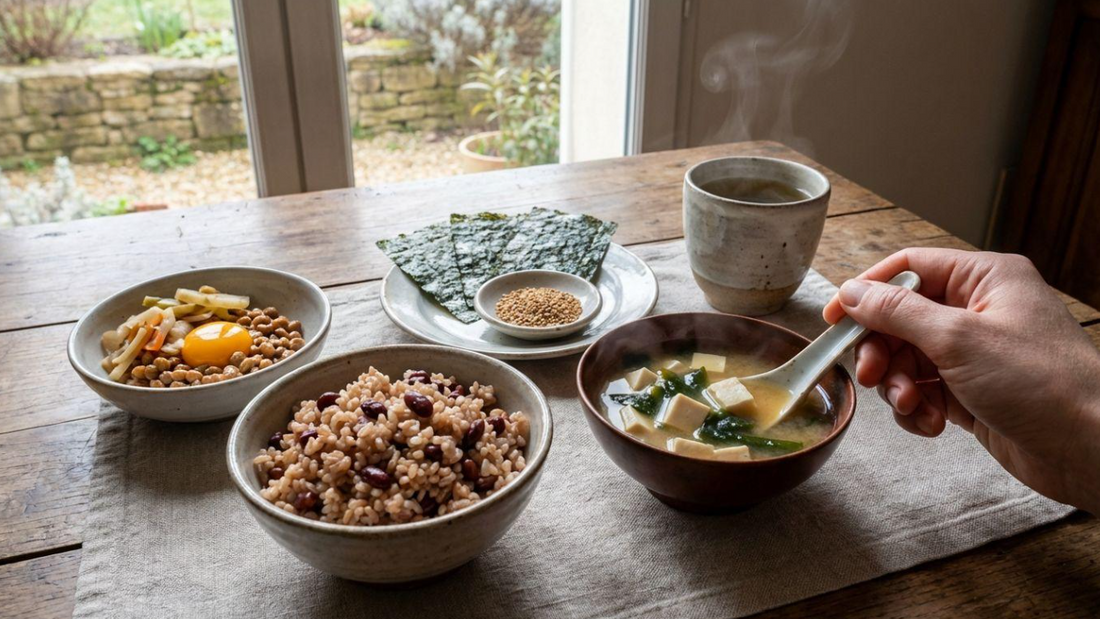
Japan has long attracted attention from researchers exploring diet, longevity and healthy ageing. Traditional Japanese diets include a variety of soy foods, from tofu and soy milk to fermented foods such as natto and miso.
But does eating soy have the same relationship with health regardless of how it is prepared?
A large Japanese prospective cohort study published in The BMJ in 2020 explored this question by examining soy consumption and mortality among 92,915 adults over an average of 14.8 years.
The findings were intriguing: higher fermented-soy intake was associated with lower all-cause mortality, while natto intake was associated with lower cardiovascular mortality.
These results do not prove that fermented soy makes people live longer. They do, however, provide a useful starting point for understanding why researchers are interested in fermented foods and their place in long-term dietary patterns.
Inside the Japanese study of 92,915 adults
Published on 29 January 2020, the study was titled Association of soy and fermented soy product intake with total and cause specific mortality: prospective cohort study.
Researchers analysed data from the Japan Public Health Centre-based Prospective Study, involving adults aged 45–74 years across 11 public health centre areas in Japan.
The study included:
-
92,915 participants: 42,750 men and 50,165 women.
-
14.8 years of average follow-up: allowing researchers to examine long-term mortality outcomes.
-
13,303 deaths recorded: during the follow-up period.
-
Different soy food categories: including fermented soy products such as natto and miso, alongside non-fermented products such as tofu.
Participants reported their dietary habits through a food-frequency questionnaire. Researchers then examined associations between reported soy consumption and deaths from all causes, cardiovascular disease and other major causes.
The study was observational. Participants were not randomly assigned to eat particular quantities of soy, so the findings show associations rather than proof that a specific food caused a particular outcome.
Read the original research: The BMJ, 2020.
What did the researchers find about fermented soy?
One of the study's most notable findings concerned fermented soy products, specifically natto and miso.
After adjusting for several potential confounding factors, the researchers found that people in the highest fifth of fermented-soy intake had lower all-cause mortality than those in the lowest fifth.
The reported hazard ratios were:
-
Men: 0.90, with a 95% confidence interval of 0.83–0.97.
-
Women: 0.89, with a 95% confidence interval of 0.80–0.98.
These results correspond to approximately 10% lower relative hazard in men and 11% lower relative hazard in women when comparing the highest and lowest intake groups.
It is important to understand what these numbers mean. They describe a difference in observed mortality rates between groups, not a guaranteed reduction in an individual's risk. They also do not mean that eating fermented soy will extend a person's life by a specific number of years.
Interestingly, total soy intake was not significantly associated with all-cause mortality in the adjusted analysis. This suggests that different soy foods may have different relationships with health outcomes, although the study cannot establish why.
The distinction between fermented and non-fermented soy is therefore worth investigating rather than assuming all soy products have identical effects.
Why did natto attract particular attention?
Natto is a traditional Japanese food made by fermenting soybeans with Bacillus subtilis var. natto. It is known for its distinctive aroma, sticky texture and fermentation-derived compounds.
In the BMJ study, natto intake showed an inverse association with cardiovascular disease mortality in both men and women.
Comparing the highest intake category with the lowest, the researchers reported hazard ratios of:
-
Men: 0.76, with a 95% confidence interval of 0.65–0.90.
-
Women: 0.79, with a 95% confidence interval of 0.65–0.95.
In relative terms, these estimates correspond to approximately 24% lower cardiovascular mortality hazard among men and 21% lower hazard among women in the highest natto-intake groups.
These are associations observed in the study population. They should not be interpreted as evidence that natto itself reduces cardiovascular mortality by those percentages when consumed by an individual.
The researchers did not establish a single mechanism responsible for the findings. Natto contains several nutrients and fermentation-derived compounds, and people who eat more natto may also differ in other dietary and lifestyle characteristics.
The study therefore raises interesting questions about natto and cardiovascular health without providing a definitive answer about cause and effect.
Why might fermentation matter?
Fermentation changes the properties of food through the activity of microorganisms.
In natto production, Bacillus subtilis var. natto grows on cooked soybeans and produces compounds that contribute to the food's distinctive characteristics.
Soybeans already provide protein, fibre, unsaturated fats and other nutrients. Fermentation changes the food's composition and can influence the availability and concentration of particular compounds.
Natto is also associated with vitamin K2 in the MK-7 form and contains nattokinase, an enzyme produced during fermentation.
These characteristics make natto an interesting subject for food science. However, the BMJ cohort study did not isolate the effects of MK-7, nattokinase or any other single compound. It examined reported food intake and subsequent mortality.
It would therefore be incorrect to attribute the observed mortality associations to one specific nutrient or enzyme.
Understanding the role of fermentation requires research that looks beyond a single compound and considers the food, its preparation and the context in which it is consumed.
Does this explain Japan's reputation for longevity?
Japan is often discussed in conversations about longevity, but healthy ageing is influenced by many factors.
Diet is one part of a much broader picture that includes physical activity, smoking, alcohol consumption, healthcare, socioeconomic circumstances, social connections and other lifestyle characteristics.
Traditional Japanese eating patterns include a range of foods, including vegetables, fish, soy products and fermented foods. Natto is one component of that dietary tradition, not a complete explanation for the country's longevity patterns.
The BMJ study supports further investigation into fermented-soy consumption and mortality, but it cannot establish that natto is responsible for Japan's longevity or that increasing natto consumption will reproduce population-level outcomes elsewhere.
The more useful takeaway is that dietary patterns deserve to be studied as a whole, while individual foods can provide valuable clues about nutrition and health.
What are the limitations of the research?
Large cohort studies are valuable because they can follow many people over extended periods. However, their findings require careful interpretation.
1. Observational research cannot prove causation
Participants chose their own diets. Researchers adjusted for several known factors, but other differences between people who ate more fermented soy and those who ate less may have influenced the results.
This is known as residual confounding.
2. The study relied on reported dietary intake
Food-frequency questionnaires are useful for estimating dietary habits, but they can introduce measurement errors. Reported intake may not perfectly reflect what participants ate over time.
3. The findings may not apply equally to everyone
The participants were Japanese adults aged 45–74 at baseline. Their dietary habits and food choices may differ from those of other populations.
The results should not automatically be generalised to people in every country or to people consuming natto in a different form.
4. Food intake is not the same as supplement intake
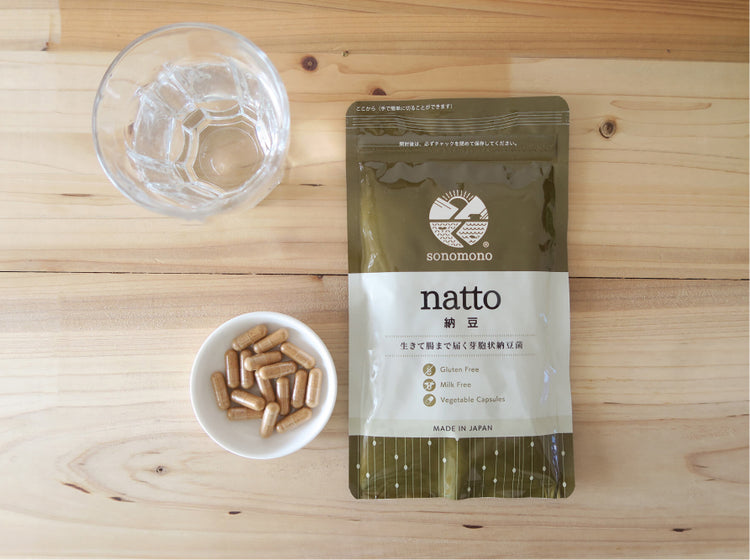
The study investigated natto and miso as foods. It did not test SONOMONO Natto Powder Capsules or establish that natto supplements produce the same associations with mortality.
A food-based observational finding cannot be used as proof of a supplement's efficacy.
5. An association does not establish a biological mechanism
Although natto contains compounds of scientific interest, the study did not determine which components, if any, accounted for the observed associations.
Further research is needed to understand the mechanisms involved and to establish whether the associations translate into causal health effects.
What does this mean for Sonomono natto powder?
At Sonomono, natto is the foundation of a product designed to offer a convenient way to consume natto in powder form.
The wider research on traditional fermented soy foods provides useful context for understanding why natto continues to attract scientific interest.
However, the distinction between food research and product-specific evidence matters.
The BMJ study examined habitual consumption of fermented soy foods among Japanese adults. It did not investigate Sonomono Natto Powder Capsules, determine an equivalent capsule dose or demonstrate that taking natto powder produces the same mortality associations.
Sonomono's whole-natto positioning can be discussed in the context of natto as a fermented soybean food, while the findings of this cohort study should remain attributed to the foods and population actually investigated.
The research is a reason to keep exploring natto—not a basis for promising that a particular supplement will extend lifespan or prevent cardiovascular disease.
How to interpret longevity research more thoughtfully
When reading a study about food and longevity, a few questions can help put the findings into perspective:
-
What was studied? A whole food, a specific nutrient or a supplement?
-
Who participated? Consider the participants' age, location and dietary habits.
-
What was measured? Mortality, a biomarker, a symptom or another outcome?
-
Was the research observational or experimental? This determines what conclusions can reasonably be drawn.
-
Were the findings independently replicated? A consistent body of evidence is more informative than a single study.
These questions are particularly important when research is used to inform product decisions or public-facing nutrition content.
The Japanese cohort provides a substantial dataset and a long follow-up period, but its conclusions remain observational.
Frequently asked questions
Is fermented soy associated with longer life?
The 2020 BMJ study found that higher fermented-soy intake was associated with lower all-cause mortality among Japanese men and women. Because the study was observational, it cannot prove that fermented soy caused the difference or that it extends lifespan.
Did the study find that natto was associated with cardiovascular health?
Higher natto intake was associated with lower cardiovascular disease mortality in both men and women. The study did not prove that natto directly prevents cardiovascular disease.
How many people participated in the study?
The study included 92,915 Japanese adults aged 45–74 years and followed them for an average of 14.8 years.
Is natto better than tofu for healthy ageing?
The study found different associations for fermented and non-fermented soy categories, but it did not establish that natto is universally better than tofu. Both foods have different nutritional characteristics and can form part of a varied diet.
Can Sonomono natto powder provide the same benefits reported in the study?
The study did not test Sonomono Natto Powder Capsules or establish supplement efficacy. Its findings should not be used to promise the same mortality associations from a powder or capsule product.
What is the main takeaway from the study?
Higher fermented-soy intake was associated with lower all-cause mortality, while natto intake was associated with lower cardiovascular mortality in this Japanese cohort. The results are scientifically interesting but do not establish cause and effect.
The bottom line
The study of 92,915 Japanese adults adds to the scientific conversation around fermented soy and healthy ageing. Its findings highlight associations between higher fermented-soy intake and lower all-cause mortality, as well as an inverse association between natto intake and cardiovascular mortality.
But the distinction between association and causation remains essential.
Natto is an interesting fermented food with a distinctive nutritional and biochemical profile. Understanding its potential place in healthy dietary patterns will require continued research, careful interpretation and product-specific evidence where supplements are concerned.
Healthy ageing is a complex process. A single food may be worth studying, but no single study can explain it all.