How Food Processing Changes What We Measure
Heating, drying, milling, fermentation and storage can change what we measure in food. Discover how processing affects food composition, why measurement methods matter, and why compositional changes do not automatically prove a health benefit.
How Food Processing Changes What We Measure
When we look at a food's nutritional profile, we often see numbers: protein per 100 grams, vitamin content, moisture percentage, fibre, minerals or the concentration of a particular compound.
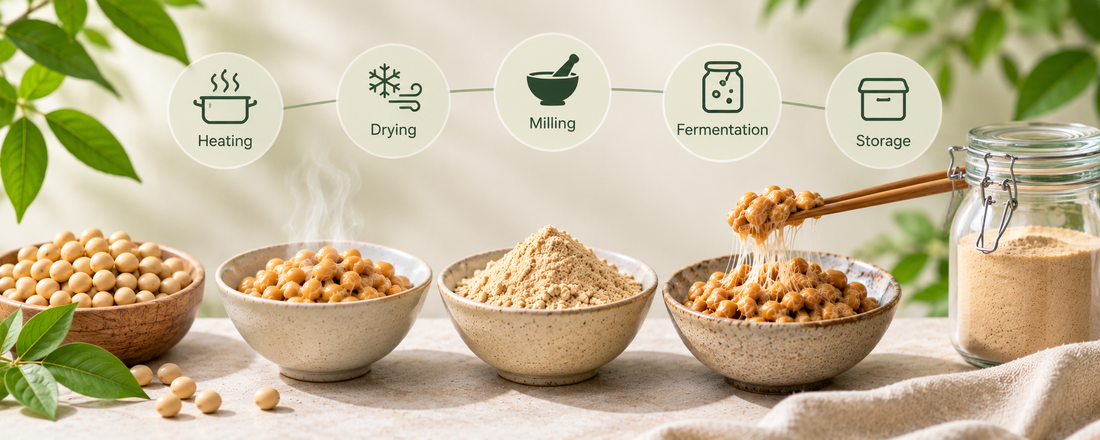
But food is not static. Heating, drying, milling, fermentation and storage can all change its measurable properties. Sometimes a nutrient is lost. Sometimes water is removed, making a nutrient appear more concentrated. In other cases, processing changes the structure of a food or transforms compounds into different forms.
Understanding these changes is essential when comparing foods, interpreting laboratory results or evaluating claims about ingredients.
The important distinction is that a measurable change in food composition does not automatically demonstrate a health benefit or harm. To understand what a result means, we need to know what was measured, how the food was processed and what the evidence can actually tell us.
1. What does food composition mean?
Food composition describes the components present in a food and, where measured, their quantities. Depending on the purpose of the analysis, this can include:
-
Macronutrients such as protein, fat and carbohydrates.
-
Vitamins and minerals.
-
Dietary fibre and other food constituents.
-
Water and total solids.
-
Naturally occurring compounds, including selected polyphenols.
-
Microorganisms and their measured characteristics in fermented foods.
Food composition data is used in nutrition research, food labelling, dietary assessment, quality control and product development. Resources such as the FAO/INFOODS directory of food composition tables and databases help researchers and other users locate relevant datasets.
However, a composition value is meaningful only in context. Is the food raw or cooked? Fresh or dried? Whole or milled? Has it been fermented? Was the value measured directly or estimated from another source?
These details can affect how a number should be interpreted.
2. Heating: temperature and time matter
Heating is one of the most familiar forms of food processing. Cooking, blanching, pasteurisation and sterilisation all involve heat, but they differ in their purposes and conditions.
Heat can affect food in several ways.
Some nutrients are sensitive to heat. Certain vitamins, including vitamin C and thiamine, can be affected by temperature and processing duration. The extent of change depends on the food, the heating method and other conditions.
Food structure can change. Heating can alter proteins and starches, affecting texture, digestibility and other properties.
Some compounds may become easier to access. Changes in the food matrix can sometimes improve the release or accessibility of certain compounds during digestion or analysis.
Water may be lost or added. Cooking can change the weight of a food, which affects the concentration reported per 100 grams.
For example, if a food loses water during roasting, the remaining solids may account for a greater proportion of its final weight. A nutrient expressed per 100 grams of roasted food may therefore appear more concentrated than the same nutrient expressed per 100 grams of the raw food—even when the total amount of that nutrient has not increased.
This is why comparisons should specify whether values refer to the food before or after cooking.
The scientific literature on nutrient retention during heat treatment highlights the importance of processing conditions, food composition and storage when interpreting nutrient changes.
3. Drying: concentration is not the same as creation
Drying removes water to help preserve food, reduce weight or create a convenient ingredient. Common approaches include air-drying, spray-drying and freeze-drying.
Removing water changes the relationship between the food's moisture and its remaining solids. This can make some constituents appear more concentrated when measured by weight.
Imagine comparing a fresh ingredient with a dried version. The dried material contains less water, so 100 grams of the dried product may represent considerably more original food material than 100 grams of the fresh product.
That does not mean drying has created additional protein, minerals or other nutrients. The apparent difference may largely reflect the removal of water.
At the same time, drying conditions can affect particular nutrients and compounds. Temperature, exposure to oxygen, duration and the nature of the ingredient all matter. Some constituents may degrade, while others may remain relatively stable.
Freeze-drying removes ice under reduced pressure and is often used when a relatively low-temperature drying process is desirable. However, the method alone cannot establish how much of every nutrient or biological component remains in the final product.
When comparing fresh and dried foods, check the basis of measurement. Values per 100 grams of product, per serving and per gram of dry matter answer different questions.
4. Milling: what gets removed matters
Milling reduces the size of food particles and may separate different parts of an ingredient.
The effect on composition depends on what is retained and what is removed.
Consider cereal grains. A whole grain contains several parts, including the bran, germ and starchy endosperm. Refining can remove portions of the bran and germ, which contain dietary fibre and various vitamins, minerals and other compounds.
The resulting flour can therefore have a different composition from the original whole grain.
Milling can also change particle size and surface area. These physical changes may influence how a food behaves during cooking, how it interacts with water and how certain constituents are extracted during laboratory analysis.
The same principle applies beyond grains: whenever processing separates or concentrates parts of an ingredient, the composition of the resulting material depends on which fractions remain.
A label that says “powder” or “milled” does not, by itself, tell us whether the original food's composition has been fully retained.
5. Fermentation: transformation, not just preservation
Fermentation involves microorganisms transforming components of food under particular conditions. The outcome depends on the microorganisms involved, the starting ingredients and the fermentation process.
During fermentation, microorganisms may use some available sugars and produce other compounds. Acidity, flavour, aroma and texture can change. The quantities or forms of certain nutrients and other constituents may also change.
Fermentation can sometimes improve the accessibility of particular nutrients or reduce selected antinutritional factors. It can also lead to the breakdown or consumption of other compounds. These outcomes are specific to the food and process rather than universal effects of fermentation.
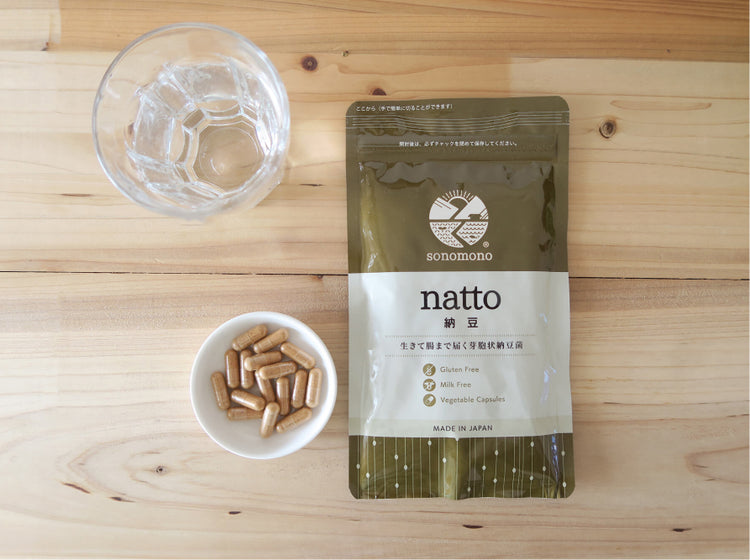
Natto, the traditional Japanese fermented soybean food, provides an example. Its characteristics develop through fermentation with Bacillus subtilis var. natto.
The composition of natto may differ from that of the soybeans used to make it. But the exact differences depend on the starting material and the manufacturing process.
It is also important to distinguish between a fermented food, a powdered fermented food and a supplement containing an isolated compound. These are different product forms and should not be assumed to have identical composition.
For more background, explore our related Living Alpha articles on natto basics and the science of fermentation.
6. Storage: composition can continue to change
Processing does not necessarily end when a food leaves the production line. Storage conditions can affect its properties over time.
Depending on the food and its packaging, relevant factors include:
-
Temperature.
-
Exposure to oxygen and light.
-
Moisture and humidity.
-
Packaging integrity.
-
Storage duration.
-
Enzymatic activity and microbial growth.
Some nutrients and compounds can degrade during storage. Other changes may affect colour, flavour, texture or the stability of the food.
Moisture also matters for measurement. A dried ingredient that absorbs water during storage may show a different concentration per 100 grams, even if the total amount of a particular constituent has not changed proportionately.
For products containing microorganisms, storage conditions can also affect viability. The presence of a microorganism at one point in the manufacturing process does not automatically establish the quantity that remains viable at the end of shelf life.
This is why storage instructions, appropriate packaging and product-specific stability information matter when evaluating a processed food.
7. Why the measurement method matters
A laboratory result is not simply a property of the food in isolation. It also depends on how the sample was collected, prepared and analysed.
Reliable food composition analysis requires methods appropriate to the nutrient or compound being measured. Different analytical methods can have different strengths and limitations, and results may not be directly comparable if the methods or sample preparation differ.
For example, consider a comparison between two powders. One sample might contain more moisture than the other. If results are reported on an “as sold” basis, that difference can influence the reported concentration. Reporting results on a dry-matter basis may help answer a different question.
Other important considerations include:
-
Representative sampling: Does the sample reflect the product or batch being described?
-
Method selection: Is the analytical method suitable for the compound and food matrix?
-
Units: Are results reported in comparable units?
-
Detection limits: Can the method reliably measure the concentration in question?
-
Quality assurance: Were appropriate controls and validated procedures used?
-
Data source: Was the value measured directly, calculated or taken from a reference database?
The FAO's resource on food composition data and analytical methods explains why method selection and quality assurance are important for reliable results.
A numerical result should therefore be interpreted alongside its method, units, sample description and limitations.
8. Does a change in composition mean a health benefit?
Not necessarily.
A measurable change tells us something about the food or the way it was analysed. It does not automatically tell us what happens when someone eats it.
Several concepts need to be distinguished:
Composition: What is present in the food, and in what quantity?
Bioaccessibility: How much of a component may be released from the food matrix during digestion and become available for potential absorption?
Bioavailability: How much of a component is absorbed and becomes available for use by the body?
Health outcome: Does consuming the food produce a meaningful effect on health, as demonstrated by appropriate evidence?
These questions are related, but they are not interchangeable.
For instance, a processing method might change the measured concentration of a compound. That result alone does not prove that the body absorbs more of it or that consuming the processed food improves a health outcome.
Similarly, detecting a particular compound in a fermented food does not establish that the food prevents or treats a disease.
Health claims require evidence appropriate to the claim being made. Depending on the question, that may include studies of bioavailability, human research and clinical outcomes—not just a composition analysis.
9. A practical checklist for evaluating processed foods
When comparing two food products or interpreting a research finding, ask these questions:
-
What was measured? Identify the nutrient, compound or property.
-
What form was analysed? Check whether the food was raw, cooked, dried, milled or fermented.
-
How is the value expressed? Look for the serving size, weight basis and units.
-
What processing conditions were used? Where available, check the method and relevant parameters.
-
How was the measurement obtained? Look for the analytical method and whether the result was measured directly or estimated.
-
Was storage considered? Processing and storage can both influence the final composition.
-
What conclusion does the evidence support? Separate a measured change from a claim about absorption, wellbeing or disease prevention.
These questions help put food composition numbers into context and make comparisons more meaningful.
The bottom line
Heating, drying, milling, fermentation and storage can all change the measurable properties of food. Sometimes the change reflects a loss or transformation of a component; sometimes it reflects a change in water content, food structure or the way the sample is analysed.
The key is to understand what was measured and how the result should be interpreted.
At Living Alpha, we believe good food science starts with clear questions, transparent methods and claims that stay within the limits of the evidence. A change in composition can be scientifically interesting—but understanding its significance requires looking beyond a single number.
Disclaimer: This article is for general educational purposes only and is not medical or nutritional advice. Food composition varies with ingredients, processing, storage and analytical methods. The presence or concentration of a compound does not by itself establish a health benefit. Consult a qualified healthcare professional for advice about individual dietary or medical needs.