The Sticky Science of Natto: Can This Japanese Superfood Transform Your Gut?
Discover what makes natto different, how its unique fermentation works and what emerging research reveals about its relationship with gut health.

Most foods become less appealing when they turn sticky. Natto is an exception.
This traditional Japanese fermented soybean dish is famous for its unusual texture, distinctive aroma and long history as a breakfast staple. But beyond its appearance, natto has attracted scientific attention for something potentially more interesting: its relationship with the trillions of microorganisms living in our digestive system.
So, what actually happens when you eat natto? And could this centuries-old Japanese food have a place in the modern gut-health conversation?
1. What makes natto different from other fermented foods?
Not all fermented foods are created in the same way.
While yoghurt relies on lactic acid bacteria, natto is traditionally produced using Bacillus subtilis var. natto. During fermentation, these bacteria transform cooked soybeans, producing enzymes and compounds that give natto its distinctive characteristics.
Those famous sticky strands? They're largely made from poly-gamma-glutamic acid, a substance produced during fermentation.
Unlike many other fermented foods, natto also naturally contains vitamin K2 in the form of MK-7, making it nutritionally distinctive.
2. What does research say about natto and gut health?
Here's where things get interesting.
A small Japanese study involving eight healthy adults examined what happened when participants consumed miso soup containing 50 grams of natto daily for two weeks.
Researchers observed several changes, including increased levels of Bifidobacterium, a group of bacteria commonly associated with gut health. They also measured increases in certain short-chain fatty acids, which are substances produced through microbial activity in the gut.
However, this was a very small study, and participants consumed natto alongside miso soup. Larger, controlled studies are needed before we can confidently attribute these changes to natto alone or establish meaningful long-term health benefits.
3. Why your gut microbiome matters
Your gut microbiome is an ecosystem of microorganisms that plays a part in digestion, metabolism and immune function.
Its composition is influenced by many factors, particularly your overall diet.
Fermented foods are interesting because they may introduce microorganisms and fermentation-derived compounds into our diet. However, the effects vary considerably depending on the food, bacterial strains, processing methods and the individual consuming them.
A 2024 scientific review highlighted several ways fermented foods may interact with gastrointestinal health, while emphasising the need for more high-quality human research.
For natto, this creates an exciting area for further investigation rather than a promise of guaranteed results.
4. Do you have to eat traditional natto to enjoy it?
For someone who has grown up eating natto, its taste and sticky texture may be perfectly normal.
For someone trying it for the first time, however, it can be quite an experience!
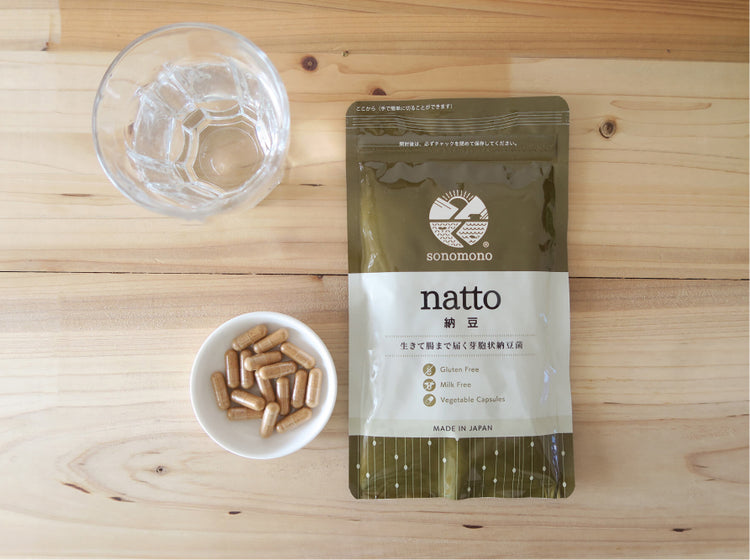
That's one reason alternative formats, including freeze-dried natto, are attracting interest. They offer different ways to incorporate this traditional food into modern lifestyles.
Sonomono™ takes this approach by using whole, freeze-dried natto in a convenient tablet format.
It's important to remember that findings from studies of traditional natto cannot automatically be applied to every processed or freeze-dried product. The amounts of individual nutrients and the viability of microorganisms can vary depending on production and storage.
The takeaway: an ancient food with modern scientific interest
Natto may be centuries old, but scientists are still exploring its nutritional properties and potential interactions with the gut microbiome.
Its combination of fermented soybeans, distinctive bacterial cultures and naturally occurring nutrients makes it an interesting subject for researchers and nutrition enthusiasts alike.
And perhaps that's what makes natto so fascinating: sometimes the foods with the longest histories still have new stories to tell.
Curious about natto but not keen on its traditional texture? Discover how Sonomono™ brings whole, freeze-dried natto into an everyday tablet format.