World Osteoporosis Day: What Lifelong Bone Health Really Needs
Strong bones need more than one nutrient. This World Osteoporosis Day, discover how calcium, vitamin D, protein, exercise, falls prevention and vitamin K fit into a lifelong approach to bone health—and what research says about natto and vitamin K2.

World Osteoporosis Day: What Lifelong Bone Health Really Needs
Strong bones are easy to take for granted—until a fracture changes the way we move, work or live independently.
But bone health isn't something to think about only in later life. It begins during childhood, continues through adulthood and becomes especially important as we age.
Observed every year on 20 October, World Osteoporosis Day raises awareness of osteoporosis, bone health and fracture prevention. The 2026 campaign, led by the International Osteoporosis Foundation, carries a timely message: Build, Protect, Strengthen Your Bones for Life.
The message is simple, but the science behind it is broader than any single nutrient or supplement.
Calcium matters. Vitamin D matters. Protein, regular exercise, fall prevention and appropriate medical care matter, too. And vitamin K, including vitamin K2, has a recognised role in normal bone physiology.
So, what does a practical, evidence-informed approach to lifelong bone health look like?
Why bone health deserves attention at every age
Bone is living tissue. It is continually remodelled, with old bone broken down and new bone formed.
During childhood and adolescence, the body builds bone mass. Peak bone mass is generally reached in early adulthood, although the timing varies between individuals and skeletal sites. Later in life, the balance between bone formation and breakdown can shift, contributing to bone loss.
Osteoporosis develops when bones become sufficiently fragile that fracture risk increases. It can progress without obvious symptoms, which is why it is often called a silent disease.
The consequences can extend beyond the initial injury. Hip and vertebral fractures, in particular, can affect mobility, independence and quality of life.
Risk is influenced by many factors, including age, hormonal changes, family history, certain medications, nutritional deficiencies, physical inactivity and previous fractures.
The goal isn't simply to build strong bones when we're young. It's to protect them throughout life.
1. Calcium: the mineral bones are built with
Calcium is the most abundant mineral in the human body, and most of it is stored in bones and teeth.
Adequate calcium intake helps maintain normal bone structure. If dietary calcium intake is insufficient, the body can draw on its calcium reserves in bone to help maintain the level needed for other physiological functions.
Useful dietary sources include:
-
Milk, yoghurt and cheese
-
Calcium-fortified plant milks
-
Calcium-set tofu
-
Certain leafy green vegetables
-
Selected nuts, seeds and calcium-fortified foods
The amount of calcium a person needs depends on age, sex and other individual factors. Food is a useful starting point, while supplements may be appropriate when dietary intake is insufficient or a healthcare professional recommends them.
More is not automatically better. Excessive supplementation can have unwanted effects, so individual needs and total intake should be considered.
2. Vitamin D: helping the body absorb calcium
Calcium intake is only part of the picture. The body also needs vitamin D to absorb calcium efficiently from the intestine.
Vitamin D contributes to normal bone maintenance and supports normal muscle function. Inadequate vitamin D can impair calcium absorption and contribute to bone problems.
The body can produce vitamin D through exposure to sunlight, although production varies with factors such as skin pigmentation, age, season, location and sun-protection practices.
Dietary sources include oily fish, egg yolks and fortified foods, depending on the diet. Supplements may be recommended for people who are deficient or at increased risk of deficiency.
Vitamin D requirements should be considered in the context of individual health and local clinical guidance. Taking high doses without a clear reason is not a substitute for assessing nutritional needs.
3. Protein: supporting the structure around the mineral
Bones are not made of minerals alone.
They also contain a protein-rich organic matrix, much of which is collagen. This framework contributes to bone structure and helps support its mechanical properties.
Adequate protein intake is therefore an important part of overall bone health, particularly as people age and work to preserve muscle mass and physical function.
Sources include:
-
Dairy products
-
Eggs, fish and lean meats, for those who eat them
-
Lentils, beans and chickpeas
-
Tofu, tempeh and other soy foods
-
Nuts, seeds and other protein-rich foods
Protein needs vary with age, activity, overall health and other factors. A balanced eating pattern that provides sufficient protein alongside essential vitamins and minerals is more useful than focusing on one nutrient in isolation.
4. Weight-bearing and resistance exercise: give bones a reason to adapt
Nutrition provides the building blocks, but physical activity is another important part of the equation.
Bones respond to mechanical loading. Weight-bearing activities and muscle-strengthening exercises can help maintain bone strength, while resistance exercise also supports muscle function, balance and everyday mobility.
Depending on a person's abilities and health, activities might include:
-
Brisk walking
-
Stair climbing
-
Dancing
-
Resistance-band exercises
-
Strength training
-
Appropriate balance exercises
Not every exercise is suitable for every person. Someone with diagnosed osteoporosis, a previous fragility fracture or significant balance problems may need an individualised programme guided by a qualified healthcare professional.
Consistency matters more than choosing an activity that sounds impressive. A sustainable routine that suits a person's age, ability and health is more likely to become a lasting habit.
5. Falls prevention: protecting bones from injury
Bone health isn't only about bone density. Reducing the likelihood of falls is also important, particularly in older adults and people at increased fracture risk.
Practical steps can include:
-
Keeping walkways clear and securing loose rugs
-
Improving lighting, especially on stairs and at night
-
Wearing appropriate footwear
-
Reviewing medicines that may cause dizziness or affect balance with a healthcare professional
-
Working on balance and lower-body strength
-
Having vision and hearing concerns assessed when appropriate
People with osteoporosis or a history of falls may benefit from a formal assessment of their fracture and fall risk.
Falls prevention is a useful reminder that protecting bone health involves the whole person: their strength, mobility, environment and overall wellbeing.
6. Vitamin K: a lesser-known part of bone physiology
Vitamin K is often discussed in the context of normal blood clotting, but it also plays a role in bone biology.
Vitamin K is needed for the activation of certain proteins involved in normal physiological processes. One of these is osteocalcin, a protein produced by bone-forming cells.
Vitamin K-dependent carboxylation helps osteocalcin bind calcium and interact with the bone mineral matrix. This provides a biological reason for researchers to investigate vitamin K and bone health.
There are different forms of vitamin K.
-
Vitamin K1 (phylloquinone) is found primarily in green leafy vegetables and some plant oils.
-
Vitamin K2 (menaquinones) includes several forms, such as MK-4 and MK-7, which occur in different foods and can also be produced through microbial processes.
Natto, a traditional Japanese fermented soybean food, is particularly well known for its MK-7 content.
However, understanding vitamin K's role in normal physiology is not the same as proving that taking additional vitamin K2 will prevent osteoporosis or fractures. Those questions require clinical outcome evidence.
What does research say about vitamin K2 and bone outcomes?
Researchers have investigated whether vitamin K2 supplementation can influence bone mineral density, bone turnover markers and fracture outcomes, particularly among postmenopausal women.
A 2022 systematic review and meta-analysis examined nine randomised controlled trials involving 6,853 participants, focusing on vitamin K2 supplementation and longer-term bone outcomes in postmenopausal women with osteoporosis.
The review reported favourable associations with changes in bone mineral density at certain skeletal sites. However, results across the wider vitamin K2 literature have not been entirely consistent, and findings for bone density do not automatically establish a reduction in fractures.
Other reviews have included different numbers of trials and populations, with conclusions varying according to the studies and outcomes analysed.
Several factors make the evidence difficult to interpret as a single, definitive answer:
-
Trials have used different vitamin K2 forms and doses.
-
Study populations and follow-up periods have varied.
-
Bone mineral density, biochemical markers and fractures are different outcomes.
-
Findings from people with diagnosed osteoporosis cannot automatically be applied to everyone.
The most responsible conclusion is that vitamin K2 has a plausible biological role and remains an area of research, but it should not be presented as a proven standalone solution for osteoporosis.
Read the research: Systematic review and meta-analysis of vitamin K2 in postmenopausal women with osteoporosis.
Natto: a traditional fermented food with a distinctive nutritional profile
Natto is made by fermenting cooked soybeans with Bacillus subtilis var. natto. The fermentation process gives natto its characteristic aroma, sticky texture and distinctive nutritional composition.
It is also a recognised dietary source of vitamin K2, particularly MK-7.
For those interested in food-based sources of nutrients, natto offers an example of how fermentation can contribute to a food's nutritional characteristics.
At Sonomono, our interest in natto centres on the whole fermented soybean food and its place in food and nutrition research.
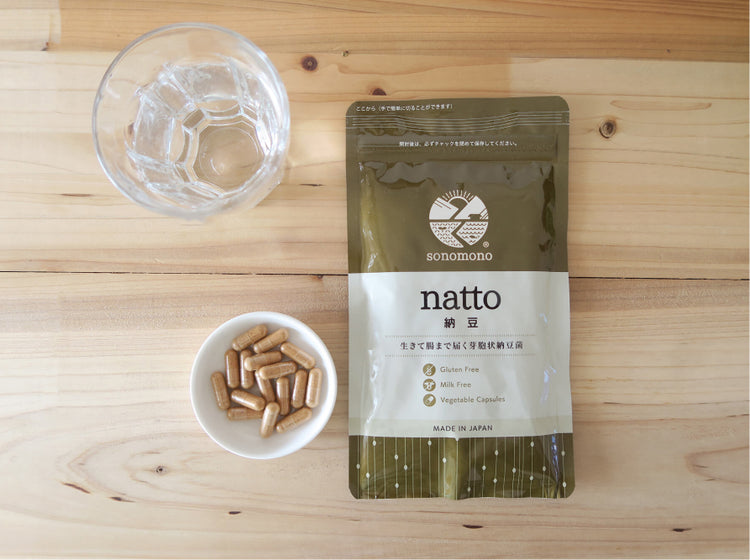
Natto powder capsules offer a convenient format for people who prefer not to eat traditional natto. However, a capsule should not be assumed to provide the same nutritional quantities as a serving of fresh natto unless the relevant product information and analytical testing support that comparison.
It is also important to separate food composition from clinical outcomes. The fact that natto contains vitamin K2 does not establish that a particular natto product prevents osteoporosis or reduces fracture risk.
For a specific product, the actual amount of vitamin K2 should be confirmed through reliable product-specific testing before making quantitative claims.
How to build a bone-health routine that lasts
A practical approach to bone health does not need to revolve around a single ingredient.
Instead, it can bring several habits together:
Eat a balanced diet. Include sufficient calcium, protein and other essential nutrients. Consider vitamin D intake and discuss supplementation if needed.
Move regularly. Incorporate appropriate weight-bearing activity, resistance exercise and balance training according to your abilities.
Reduce fall risks. Make your home safer, maintain strength and balance, and seek advice if you experience recurrent falls or dizziness.
Understand your personal risk. Age, family history, hormonal changes, previous fractures and some medicines can affect bone health.
Seek assessment when appropriate. Ask a healthcare professional whether osteoporosis risk assessment or a bone-density scan is suitable for you, particularly if you have had a fracture after a minor fall or have other risk factors.
Review supplements carefully. More is not necessarily better. Consider dietary intake, potential interactions and individual requirements before adding supplements to your routine.
For people who take warfarin or certain other vitamin K-sensitive anticoagulants, sudden changes in vitamin K intake can affect treatment. Anyone using these medicines should consult their healthcare professional before changing their intake or starting a vitamin K supplement.
This World Osteoporosis Day, think beyond one nutrient
World Osteoporosis Day 2026 highlights a simple principle: bone health deserves attention throughout life.
Calcium helps provide the mineral foundation. Vitamin D supports calcium absorption. Protein contributes to bone structure. Exercise helps maintain bone and muscle function, while falls prevention can reduce the risk of injury.
Vitamin K adds another important piece to the nutritional picture, and natto is one traditional food associated with vitamin K2.
But healthy bones are not built by one vitamin, one food or one capsule alone.
They are supported by a combination of good nutrition, regular movement, risk awareness and appropriate medical care.
Build, protect and strengthen your bones for life.
Frequently asked questions
When is World Osteoporosis Day?
World Osteoporosis Day is observed every year on 20 October. The 2026 campaign theme is “Build, Protect, Strengthen Your Bones for Life.”
What nutrients are important for bone health?
Calcium, vitamin D and protein are key parts of a balanced approach to bone health. Vitamin K also contributes to normal bone physiology, alongside other nutrients and lifestyle factors.
Is natto a source of vitamin K2?
Yes. Natto is particularly associated with vitamin K2 in the MK-7 form because of the fermentation process. The amount can vary, so the vitamin K2 content of a particular product should not be assumed without reliable testing.
Does vitamin K2 prevent osteoporosis?
Vitamin K2 has been studied for its potential effects on bone metabolism and bone mineral density. However, the clinical evidence is not definitive enough to present vitamin K2 supplementation as a standalone method of preventing or treating osteoporosis.
Can I replace calcium or vitamin D with vitamin K2?
No. These nutrients have different roles in the body. Vitamin K2 should not be considered a replacement for adequate calcium, vitamin D, protein, exercise or prescribed osteoporosis treatment.
Should everyone take a bone-health supplement?
Not necessarily. Supplement needs depend on dietary intake, health conditions, age, medicines and individual risk factors. A healthcare professional can help determine whether supplementation is appropriate.
References
-
International Osteoporosis Foundation. World Osteoporosis Day 2026: Build, Protect, Strengthen Your Bones for Life.
-
Mott A, et al. Efficacy and safety of vitamin K2 for postmenopausal women with osteoporosis at a long-term follow-up: meta-analysis and systematic review. 2022.
-
Ma ML, et al. Efficacy of vitamin K2 in the prevention and treatment of postmenopausal osteoporosis: a systematic review and meta-analysis of randomized controlled trials. Frontiers in Public Health. 2022.
This article is for educational purposes only and is not intended to diagnose, treat, cure or prevent any disease. If you have osteoporosis or are at increased risk of fracture, seek advice from a qualified healthcare professional. Do not stop prescribed treatment or change anticoagulant medication without medical guidance.